Rated 4.9/5 ⭐️ | Free shipping from €79 🚚

Schmiedeeisen oder Gusseisen? Welche Pfanne passt zu dir?

Wrought iron or cast iron? Which pan suits you?

• Madita Bayer

Wrought iron or cast iron? Which pan suits you?

• Madita Bayer

Wrought iron or cast iron? If you're looking for a sturdy pan that delivers strong roasted flavors, high temperatures, and works well over an open fire, sooner or later you'll come across these two materials. At first glance, they seem quite similar: both are solid, durable, and develop a natural patina over time.

However, when it comes to cooking, there are clear differences. That’s why in this comparison, you’ll learn how wrought iron and cast iron differ in terms of manufacturing, weight, heat behavior, care, and possible uses.

Content

Wrought iron and cast iron in direct comparison

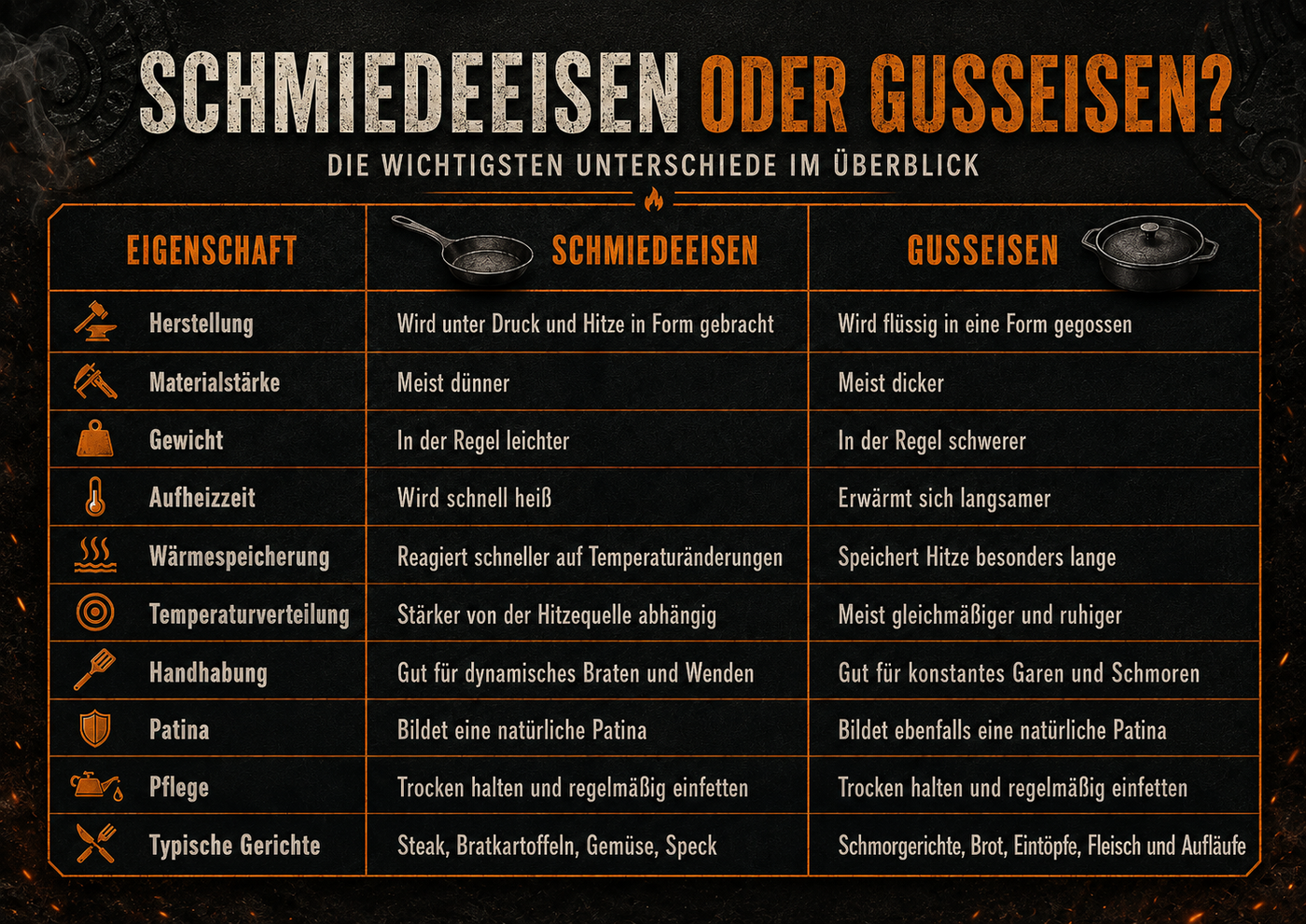
The fundamental differences between wrought iron and cast iron are mainly seen in weight, heating time, and heat retention. While one material reacts quickly and directly to heat, the other shows its strengths at steady temperatures and longer cooking times. The following overview gives you a clear view of which material has which properties.

What is wrought iron?

Cookware made from forged iron is shaped under high pressure. This allows pans to be made relatively thin yet still sturdy. They are usually lighter than cast iron models and respond more quickly to changes in heat.

A forged iron pan is especially interesting if you want to sear your food and actively control the temperature. It heats up quickly, is easier to handle, and is perfect for dishes that call for strong roasted flavors.

Typical uses include:

  • Steaks and chops
  • Fried potatoes
  • Bacon and sausages
  • Quickly sautéed vegetables
  • Fried eggs and pan dishes
  • Cooking directly over a campfire

Because of the generally thinner material, a forged iron pan responds more directly to the heat source. When you turn down the heat or take the pan off the fire, the temperature of the cooking surface changes faster than with heavy cast iron.

The Advantages of Wrought Iron

Wrought iron is especially strong when cooking needs to be quick and direct:

  • comparatively short heating time
  • great for searing
  • rich roasted flavors
  • lighter than many cast iron pans
  • easy to move and toss
  • suitable for stove, grill, and open fire
  • durable and without artificial coating

With regular use, a dark patina forms on the surface. It improves the frying properties and makes food release more easily from the pan over time.

Tip

A cast iron pan should be heated as evenly and gradually as possible. Using a small pan on a flame that’s way too big or suddenly heating it at full power can cause strong temperature differences in the material.

What is cast iron?

Cast iron is made by pouring molten iron into a mold. This process allows for solid cookware with comparatively thick walls and bottoms. This makes cast iron pans, pots, and griddles heavier – but at the same time, it gives them their characteristic heat retention.

Cast iron takes some time to fully heat up. Once the material is hot, it releases heat slowly and evenly to the food. This is a decisive advantage for longer cooking times, braising, or baking.

Typical uses include:

  • Braised dishes
  • Stews and soups
  • Bread and cakes
  • Casseroles
  • Slow-cooked meat
  • Steaks and burgers
  • Dishes with long cooking times

Cast iron is also especially versatile in shaping. In addition to classic pans, it is used to make Dutch Ovens, loaf pans, grill plates, Sandwich Irons, and many other outdoor kitchen tools.

The Advantages of Cast Iron

Cast iron shows its strengths wherever a stable and long-lasting temperature is needed:

  • excellent heat retention
  • steady and consistent heat
  • ideal for longer cooking times
  • versatile for frying, braising, and baking
  • robust and shape-stable
  • suitable for grill, stove, oven, and open fire
  • durable and without artificial coating

Petromax cast iron cookware is delivered with a so-called seasoned finish. This means it is basically ready to use right away. The patina continues to develop with further use.

Good to know

The heavy weight of cast iron is not just a side effect. The greater mass of the material is one of the reasons why heat can be retained for so long and distributed evenly.

Wrought iron or cast iron: Which material heats up faster?

Wrought iron usually heats up faster. Since wrought iron pans are generally made thinner, less material needs to be heated. This allows the heat energy to quickly reach the cooking surface.

This makes wrought iron ideal for short, intense frying sessions. If you want to sear a steak, get crispy fried potatoes, or quickly roast vegetables, you don’t have to wait long for the right temperature.

Cast iron, due to its greater material thickness, takes more time to heat up. However, it retains the stored heat much longer. When you place cold food into a well-preheated cast iron pan, the temperature remains relatively stable.

The simple rule of thumb

Wrought iron: fast heat, quick response
Cast iron: steady heat, long retention

Which pan creates better roasted flavors?

Both wrought iron and cast iron are great for developing strong roasted flavors. Both materials withstand high temperatures and don’t rely on delicate artificial non-stick coatings.

Wrought iron transfers heat especially directly to your food. This is ideal when you want to quickly and intensely sear meat, vegetables, or potatoes.

Cast iron, on the other hand, holds temperature more steadily when you add a larger amount or cold food to the pan. This can be an advantage for big steaks, burgers, or multiple servings.

Ultimately, it’s not just the material that matters, but also the right technique:

  1. Preheat the pan slowly and thoroughly.
  2. Use a suitable fat that can handle high heat.
  3. Put the food into the hot pan only.
  4. Don’t flip the meat too early.
  5. Give the pan time to reheat between servings.

Tip

Pat the meat dry before searing. Moisture on the surface needs to evaporate first and can delay the formation of a nice crust.

Is the care for wrought iron different from cast iron?

The basic care is very similar for both materials. Both wrought iron and cast iron can rust if they remain damp for a long time or are stored unprotected.

After cooking, you should therefore:

  1. let the pan cool down a bit,
  2. remove food residues with warm water,
  3. gently loosen stubborn residues,
  4. thoroughly dry the pan,
  5. lightly oil the surface if needed,
  6. store the cookware in a dry place.

Avoid soaking for a long time and do not put wrought-iron or cast iron pans in the dishwasher. Both can damage the patina and promote rust.

You can find detailed instructions in our guides:

For regular care, you can use the Petromax Care Conditioner for cast iron and wrought iron. It supports the build-up and maintenance of the patina and protects the material during storage.

Who is wrought iron suitable for?

A cast iron skillet is right for you if you:

  • want to heat your pan quickly,
  • often sear food briefly and intensely,
  • love strong roasted flavors,
  • regularly move your cookware,
  • are looking for a relatively lightweight iron pan,
  • want to cook on the stove, grill, and campfire.

Want to learn more about sizes and styles? The buying guide for cast iron skillets will help you choose.

Who is cast iron suitable for?

A cast iron pan or a Dutch Oven is right for you if you:

  • want especially consistent heat,
  • often cook larger portions,
  • enjoy braising or slow cooking,
  • want to bake bread and cakes over the fire,
  • value a stable base,
  • are looking for a versatile and durable cooking tool.

An overview of Dutch Ovens, pans, griddles, and other cookware can be found in the Petromax Gusseisen category.

Conclusion: Which is better – wrought iron or cast iron?

Wrought iron and cast iron are classics in outdoor cooking for good reason. Both materials are sturdy, heat-resistant, and develop a natural patina. Still, they offer different cooking experiences.

Wrought iron is the right choice for quick, direct heat. The pan heats up quickly, is easy to handle, and is especially suited for steaks, fried potatoes, and quickly sautéed vegetables.

Cast iron impresses with long-lasting and consistent heat. It’s great for large portions, longer cooking times, braised dishes, and baking over the fire.

But you don’t have to choose just one material. In a versatile outdoor kitchen, both complement each other perfectly: wrought iron handles the quick searing, while cast iron holds the heat and slowly finishes the dishes.

Frequently Asked Questions about Wrought Iron and Cast Iron

What is the biggest difference between wrought iron and cast iron?

The biggest difference lies in the manufacturing process and the resulting heat behavior. Wrought iron is shaped under pressure and usually made thinner. This allows it to heat up quickly and respond directly to temperature changes. Cast iron is poured into molds, is usually more massive, and retains heat longer.

Which is better: a cast iron pan or a wrought iron pan?

That depends on your cooking style. Wrought iron is especially good for quick, high-heat searing and is easier to handle. Cast iron is ideal if you want a steady temperature, long heat retention, or longer cooking times.

Is wrought iron lighter than cast iron?

At a comparable size, wrought iron is usually lighter. Wrought iron pans can be made thinner, while cast iron pans often have a thicker material.

Which pan heats up faster?

A wrought iron pan usually heats up faster. A cast iron pan takes longer to heat up but then retains the reached temperature for longer.

Which pan is better suited for steaks?

Both materials are suitable for steaks. Wrought iron provides quick and direct heat for a strong crust. Cast iron keeps the temperature especially stable when cold meat or several steaks are placed in the pan one after another.

Do wrought iron and cast iron need to be seasoned?

Both materials require a protective patina. A new cast iron pan usually needs to be seasoned. Many cast iron Petromax products already come with a seasoned finish from the factory and are ready to use right away. If needed, the patina can be renewed later.

Can cast iron and wrought iron rust?

Yes. Both materials can rust if stored damp or unprotected. Dry the cookware completely after cleaning and, if needed, care for the surface with a thin layer of oil or Care Conditioner.

Can I clean wrought iron and cast iron with dish soap?

For regular cleaning, warm water and a suitable cleaning tool are usually enough. Avoid soaking for a long time, harsh cleaners, and the dishwasher, as they can damage the patina.

Are both materials suitable for open fire?

Yes. Both wrought iron and cast iron are generally very well suited for grilling, embers, and open fire. Always pay attention to the specific product instructions and try to heat the cookware as evenly as possible.

Petromax Guide Blog

Even more knowledge for your next Adventure

Whether wrought iron, cast iron, Dutch Oven, or cooking over an open fire: In the Petromax guide, you'll find detailed instructions, practical tips, and inspiration for your outdoor kitchen. Learn how to use your gear properly, care for it, and get the most out of every Adventure.

Discover the Petromax Guide