




Less luggage, more Adventure: What really comes along when camping
Less luggage, more Adventure: Which camping gear really proves its worth on the road? Jörg shares his personal experiences and...
Fast Shipping 🚚

The best material: Cast iron
Excellent heat distribution and non-stick effect
Easy to maintain and durable


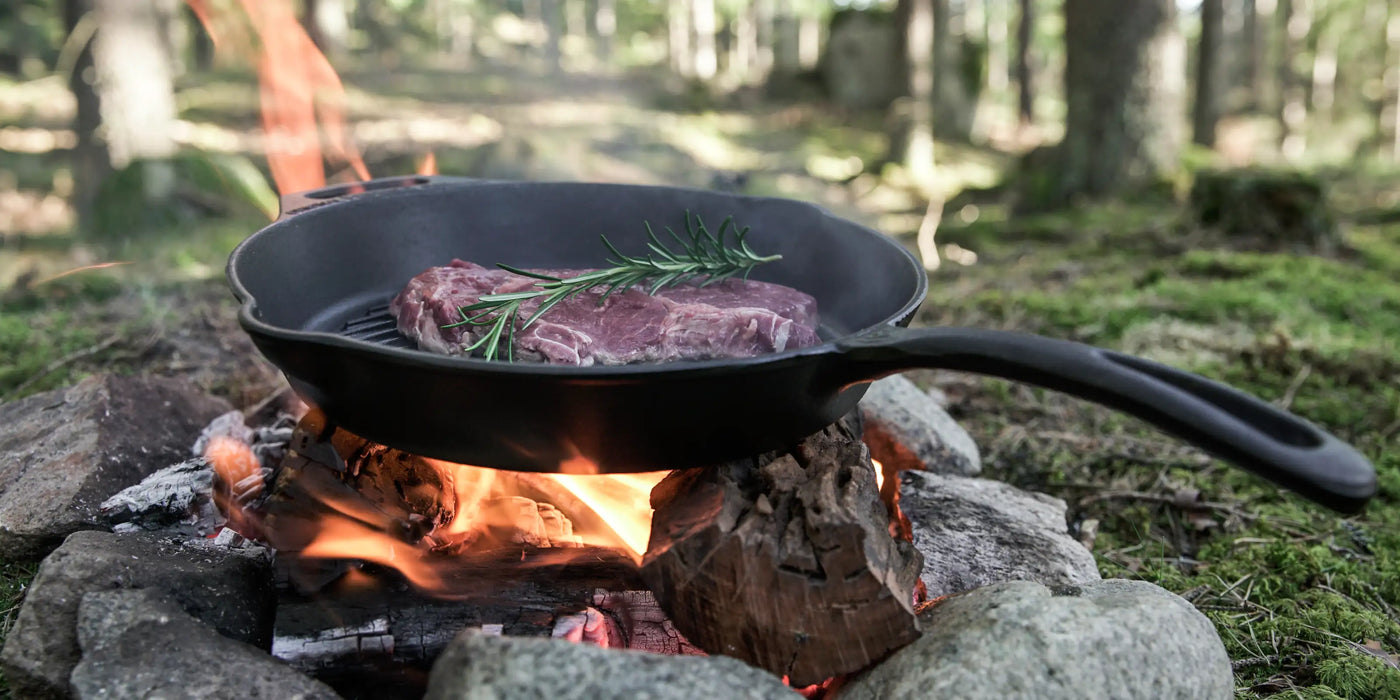
Coated pans that lose their performance over time are well known – the Fire Skillet from Petromax deliberately takes a different approach. Made from high-quality cast iron, it is designed for reliable and consistently excellent frying results – from the very first use. Without artificial coatings and reduced to the essentials, it impresses with a material that has proven itself for generations and improves in quality with every use.Cast iron stores heat particularly efficiently and distributes it evenly across the entire cooking surface. This ensures intense roasted aromas, even browning, and juicy results. The pre-seasoned surface (Seasoned Finish) allows for immediate use without prior seasoning. At the same time, a natural patina develops over time, enhancing the non-stick effect – all without additional coatings.The Fire Skillet is versatile and works reliably on electric, induction, and gas stoves as well as in the oven, on the grill, or over an open fire. The long handle with an opposite grip ensures safe handling and makes carrying and hanging easier.Available in several sizes, the Fire Skillet offers the right solution for different portions and dishes – from small meals to preparations for several people. A durable and functional choice for anyone who values reliable results and robust material when cooking.
(466)


The Fire Skillet from the Essential Line combines reduced weight with the full strength of cast iron: It retains heat reliably, fries evenly and, thanks to its seasoned finish, is ready to use straight away. The practical side pour spout and handle ensure precise handling - whether tossing, portioning or serving directly. At home on all heat sources - stovetop, oven, grill or open fire - it delivers consistent results with a natural non-stick effect that improves with every use. Two sizes (fp25 and fp30) make it the ideal companion for solo adventures as well as cooking for a larger group. From seared steaks and evenly browned fried potatoes to braised oven dishes and light desserts, the skillet handles every task with ease. Thanks to its robust construction, it is built to last while being lighter than the Professional Line, making it perfect for camping, outdoor cooking and mobile use. The new Essential design gives it a distinctive look that is both functional and decorative. Easy to care for and dependable in everyday use, it will quickly become a firm part of your cooking routine - indoors and outdoors, for every dish and every heat source.
(17)


The Fire Skillet with handles from Petromax was designed for everyone who values stability, direct heat, and versatile use when cooking. Made from solid cast iron, it impresses with its robust construction and even cooking results – whether in the kitchen, on the grill, or over an open fire.Thanks to the excellent heat retention properties of cast iron, the skillet reaches high temperatures and maintains them particularly consistently. This ensures strong roasted aromas and even browning. The pre-treated surface makes the skillet ready to use immediately and develops a natural patina with each use, continuously improving the non-stick effect.The two opposite handles allow for balanced handling and make the Fire Skillet especially practical for use at the fire pit or for serving directly at the table. At the same time, it remains flexible and works reliably on induction, electric, and gas stoves as well as in the oven or on the grill.Available in several sizes, the Fire Skillet with handles offers the right option for a wide variety of dishes and portions. For those who prefer a classic pan, a version with a long handle is also available as an alternative.
(199)


For adventurous flavors in bite-sized portions: the Poffertjes Pan helps you create an extraordinary dessert by the campfire and is especially popular with the kids around. With this special cast iron pan, you can bake 30 pieces of the Dutch mini pancakes at once and in no time. The excellent heat conductivity of the cast iron Poffertjes Pan also ensures an even baking result.Make your own Poffertjes: a sweet treat for any occasionWhether you’re cooking over an open fire or on the hot embers of your grill, the Poffertjes Pan sweetens every moment. The two handles guarantee safe handling. Plus, with a diameter of 30 cm, the pan fits perfectly into your Petromax Atago and rests on the upper edge. You don’t have to miss out on the unmistakable taste at home either, because the bottoms of the 30 baking molds are flattened. This makes the Poffertjes Pan stable on a baking sheet and suitable for use in the oven as well as on all common types of stovetops.
(14)


That makes it the perfect pan for the campfire: detachable telescopic handle for a safe distance from the fire the pan for the campfire: thanks to the detachable telescopic handle, you can safely place the cast iron pan into the fire protection from fire and embers: the telescopic handle helps you keep the right distance from the fire adjustable length: set the telescopic handle to your individually needed length using the wing screw durable material: the robust and ready-to-use cast iron pan offers excellent conditions for frying steaks, sausages, and more thanks to its natural non-stick effect and even heat distribution campfire dishes straight from the pan: the telescopic rod keeps the pan level so you can easily use it for serving The cast iron pan for the campfireThe Petromax Campfire Skillet is your reliable helper for direct cooking in the fire. Thanks to the detachable telescopic handle, you can maintain a safe distance from the fire.Place the pan either on a Petromax Cooking Stand or a Stack Grate in the fire or on the coals. Simply hook the Campfire Skillet into the telescopic handle and use the wing screw to choose the right distance from the fire. The wooden handle ensures the pan feels good in your hand. You keep full control over your cookware and food. Once the pan is resting on its bed of embers, you can easily remove the telescopic handle without having to touch the fire.After a few minutes in the fire, lift the pan out and serve the dish to your group of adventurers. Just hook the telescopic handle back on, and thanks to the crossbar on the holder, the pan stays firmly anchored so you can safely lift the Petromax Campfire Skillet out. Then it finds its place on a trivet on the table.Ready-to-use cast iron Campfire Skillet with natural non-stick effectThanks to the pre-seasoned surface, the pan is ready to use immediately. Due to the excellent properties of cast iron, the Campfire Skillet stays warm for a long time because the heat distributes evenly. This means your dishes cook gently, and after placing the pan on a trivet on the table, your prepared meal stays warm for a long time. Combine your skills as a fire cook with the unique patina and create delicious dishes with intense roasted aromas.Easy cleaning, maximum durability: the long-lasting companion for your fire kitchenWith the help of a ring cleaner, scraper, and water, the Campfire Skillet is easy to clean. To extend the life of your pan, it’s best to use the Petromax Care Conditioner specially made for cast and forged iron.The Petromax Campfire Skillet made of cast iron is your pan for the fire – and thanks to the detachable and length-adjustable telescopic handle, you no longer have to reach into the fire for a juicy steak. Be inspired by the exceptional quality and delicious taste of your prepared dishes and become a master of campfire cooking.
(6)


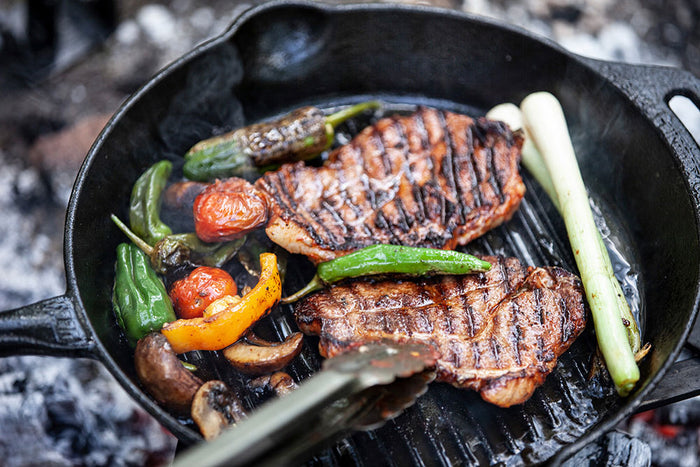
The Grill Fire Skillet with handles from Petromax combines the benefits of solid cast iron with the typical grill structure of a classic grill pan. Designed for high temperatures and intense roasted flavors, it is ideal for use on the grill, stove, or directly over an open fire.The integrated grill ridges ensure that meat, fish, or vegetables get characteristic grill marks and that excess liquid can drain away better. At the same time, the solid cast iron stores heat particularly efficiently and distributes it evenly across the entire surface. The result is strong roasted aromas and even cooking results.The two opposite handles allow for safe handling and make the pan especially practical when used at the fire pit or when serving directly at the table. The pre-seasoned surface is ready to use immediately and develops a natural patina with each use, improving the non-stick effect.Whether gas stove, induction, grill, or campfire – the Grill Fire Skillet with handles is versatile and shows its strengths wherever high heat and authentic grilled flavor are needed.
(17)

The Petromax Grill Fire Skillet with handle was designed for everyone who values intense roasted flavors and distinctive grill marks when frying. Made from solid cast iron, it reaches high temperatures, retains heat especially efficiently, and ensures even results – whether on the grill or in the kitchen.The characteristic grill ridges slightly lift the food, allowing excess liquid to drain and creating typical roast marks. At the same time, the aroma is preserved, and meat, fish, or vegetables develop an intense browning. The pre-treated surface makes the skillet ready to use immediately and develops a natural patina with each use for improved non-stick properties.The long handle provides controlled handling while frying and makes it easier to move the skillet on the grill, stove, or fire pit. Thanks to the robust cast iron, the Grill Fire Skillet is suitable for high temperatures and a wide variety of cooking methods.Whether on induction, gas, in the oven, or directly over an open fire – the Grill Fire Skillet is versatile and offers the ideal foundation for strong roasted flavors and authentic grilled taste.
(31)

In the transport bag for the fire pan, you can easily carry your favorite pan through forests, open terrain and mountain landscapes thanks to the reinforced carrying handles. After use, you can store the fire pan safely and easily in the transport bag, as it is optimally protected by the particularly durable and tear-resistant ripstop fabric. This means you can bring your fire pan to your campfire cooking area in the camper, protected from shocks and vibrations.The inside of the transport bag has a stowage option for the handle bag. In the case of fire pans with a handle, this handle bag can simply be folded over and protects the handle from knocks and dirt. For your pan with two short handles, simply put the handle bag inside. The transport bag also has a spacious zippered pocket and two separate mesh pockets inside so that your accessories, such as a gas burner, fire kit or scraper, can be easily stored and taken along. The lid of the transport bag for the fire pan features the traditional dragon logo and the Petromax lettering.Please place a sheet of paper between the grill plate and the cooking cross to avoid scratching the plate. The grill plate must be cleaned with kitchen paper or ring cleaner and water (do not use washing-up liquid) and be dry before transportation.Scope of delivery1 x Petromax transport bag for fire pan
(8)


With the Petromax cast iron brush set, you can clean and care for your cast iron products more thoroughly and gently than ever before. Two interchangeable brush heads - a round head with soft bristles for applying the care paste and a square head withstrong bristles for intensive cleaning - give you fullflexibility for every step of cast iron care.The ergonomic bamboo handle lies comfortably in the hand and has an integrated scraper edge whose curves are perfectly matched to Petromax cast iron items. Burnt-on residues can be removed without damaging the valuable patina.Both brush heads can be removed from the handle and are particularly easy to clean. Thanks to its compact design, you can even transport the set in a Dutch Oven from size ft6 - idealfor cooking, camping and outdoor adventures.Whether removing residues, maintaining the patina or cooking over an open fire: the cast iron brush set helps you to maintain your cast iron products for a long time - without any aggressive chemicals.
(16)
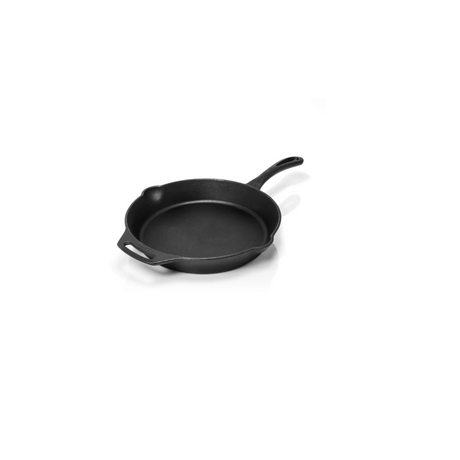

This set consists of two high-quality cast iron fire pans, which you can choose from six different diameters (15/20/25/30/35/40 cm). These robust pans with a classic handle and opposite handle combine traditional cooking skills with the highest quality and are indispensable all-rounders both over an open fire and in the kitchen at home. Made from high-quality cast iron, the pans are characterized by their outstanding heat distribution and excellent heat storage capacity, which means you can even serve your dishes directly in the pan. Thanks to the factory pre-treated surface (seasoned finish), the pans are immediately ready for use and develop an increasingly strong natural non-stick effect with every use thanks to the patina that forms - without any artificial coating. The flexible choice of sizes allows you to put together the ideal pan duo for your individual needs - from the small 15 cm pan for single portions to the generous 40 cm version for family gatherings. The ergonomic handle and the opposite handle ensure safe transportation and also offer the option of hanging the pans up to save space. Whether on the electric or induction hob, over the gas flame, in the oven or outside on the campfire - the universal pans master every cooking situation with flying colors. From the perfect steak to crispy fried potatoes to delicate braised dishes - the durable Petromax fire pans accompany you on your culinary journey and get better with every use.


Aramid handle cover fire pan 2x


Care Conditioner set for cast iron and wrought iron with cast brush
The Petromax set of Care Conditioner and cast iron brush set is the practical combination for cleaning and caring for your products made of cast iron and wrought iron. The Care Conditioner protects the surface, supports the preservation of the patina, and helps keep Dutch Ovens, pans, Dutch Ovens, and other cast iron cookware ready for use.Care and cleaning in one setWith the Care Conditioner, you oil your cast iron after cleaning or prepare it for seasoning. The cast iron brush set helps you clean, care for, and apply the conditioner so your cast iron products stay reliably protected.For long-lasting cast ironRegular care protects against corrosion and preserves the durable surface of your cast iron products. This way, pans, Dutch Ovens, and other cast iron accessories stay ready for the next use on the fire, grill, or stove.
(5)

Care Conditioner for Cast Iron and Wrought Iron 2-Pack
The Petromax Care Conditioner is the perfect complement for anyone who wants to keep their cast iron and wrought iron products in top shape for the long term. It preserves the pre-treated surface (seasoned finish) of Dutch Oven, pans, and fire pots, ensuring they remain protected and ready to use over time.Applied after cleaning, the conditioner deeply nourishes the material and protects it from corrosion and external influences. This keeps the existing patina intact while allowing it to develop further through regular use and care, enhancing the natural cooking properties.The Care Conditioner is also excellent for seasoning. Important: Small rust spots must first be brushed off with a wire brush, then cleaned and re-seasoned. The conditioner itself does not remove rust but supports the formation of an even protective layer and effectively prevents new corrosion – ideal for new or refurbished cast products.


The Petromax FP25-T & FP30-T fire skillet set combines two sizes that no kitchen or fire pit should be without. With diameters of 25 and 30 cm, you have the right skillet on hand for every dish - from crispy fried potatoes to juicy steak. Two sizes, one goal: full heat, full flavor and a cooking experience that delights. Both skillets are made of high-quality cast iron, renowned for its outstanding heat distribution and durability. Thanks to their pre-treated surfaces, the skillets are ready to use right away and develop an even better patina with every use. This means increasingly better frying results every time you cook. Whether on the stovetop, in the oven or over a campfire - this set is at home on any cooking surface. Cast iron retains heat for particularly long periods, so you can serve your dishes directly in the skillet. The natural non-stick effect helps ensure everything turns out perfectly - from delicate fish fillets to hearty goulash. With the FP25-T & FP30-T set, you're perfectly equipped for every situation - indoors and outdoors. Two sizes, one goal: incomparable flavor, a rustic cooking experience and long-lasting quality in the Petromax tradition.

Essential Line Fire Skillet Set FP25-T and FP30-T
With the Feuerpfannen Essential Duo, you're well equipped for all kinds of cooking. The combination of the fp25-t and fp30-t Essential gives you the right pan size for every occasion, from small dishes to larger meals for family and friends.The Essential pans combine the benefits of cast iron with a lighter weight than the Petromax Original fire pans. They're comfortable to hold while still delivering the even heat distribution and excellent heat retention that cast iron is known for.Thanks to the seasoned finish, both fire pans come pre-seasoned and ready to use. With every use, the natural patina develops further, helping to prevent food from sticking. The side spout and ergonomic handle also make frying, tossing and serving comfortable.Whether you're using a stovetop, oven, grill or open fire, the Feuerpfannen Essential Duo goes from breakfast in the kitchen to lunch on the gas grill to dinner around the campfire. Its distinctive design combines practical details with the unmistakable look of the Essential series.
The classic fire pan is the all-rounder for every kitchen. It is Versatile in usefrom classic roast dishes to casseroles.
Do you love versatility? Then the fire pan is your perfect companion.
All the advantages at a glance:
The Grill and fire pan is the specialist for barbecue enthusiasts. The ribbed surface provides for Characteristic grill stripes and an intense aroma. Perfect for steaks, vegetables and everything you normally prepare on the barbecue.
Are you a barbecue fan? Then you'll love the grill pan.
All the advantages at a glance:
Cast iron pans are made from cast iron and are a classic, traditional cookware that doesn’t require any artificial coating. With cast iron pans, frying at high temperatures is possible, which makes them especially well-suited for searing and braising meat.
Anyone who knows the true value of a cast iron pan won’t want to miss the incomparable flavor that the food cooked in it develops. The natural patina that forms over time makes each pan a unique kitchen helper.
Cast iron pans impress with their unique material properties: they retain heat exceptionally well and distribute it evenly across the entire cooking surface. This leads to perfect frying results and allows for energy-efficient cooking, as the temperature is maintained for a long time.
The natural patina makes chemical non-stick coatings unnecessary and ensures healthy cooking without harmful substances. At the same time, cast iron releases small amounts of iron into the food, which provides a nutritional benefit.
The extreme durability is another advantage – with proper care, cast iron pans can last for generations. They even improve over time as the patina continuously strengthens and the non-stick properties get better.
You can prepare anything you want in a cast iron pan. Whether vegetables, fish, meat, or colorful skillet dishes – there are no limits. Thanks to its versatile use in the oven, at home, or on the go, it’s perfect for searing and finishing cooking or even baking sweet or savory cakes.
For that special roasted flavor, the Grill Fire Skillet offers the best conditions, as it is additionally equipped with ridges that create the typical grill marks and allow cooking juices to drain.
Important note: Only the use of acidic foods should be avoided to protect the natural patina. Tomatoes, citrus fruits, or vinegar can attack the protective layer and should therefore be avoided.
Using a cast iron pan is not fundamentally different from regular pans, but there are important specifics to keep in mind. The key to successful cooking is proper preheating: heat the pan slowly over medium heat until it reaches the desired temperature. A drop of water should evaporate immediately when the pan is ready.
Unlike coated pans, cast iron pans develop their own protective layer: the patina. This natural non-stick property is valuable and needs to be maintained. Use plenty of fat or oil, especially with new or lightly seasoned pans. Over time, you'll need less and less fat as the patina develops better non-stick qualities.
Don’t move the food too early – it will release on its own when it’s properly seared. After cooking, let the pan cool slightly before cleaning. Avoid using harsh cleaners or dish soap to preserve the valuable patina.
After cleaning, always store the pan dry and occasionally recondition it with Petromax Care Conditioner for cast and forged iron.
Cast iron pans do not have an artificial coating in the traditional sense. Instead, they develop a natural patina through seasoning, which acts as an organic non-stick layer. This natural coating is much more durable than chemical alternatives and actually improves over time.
The patina forms through the polymerization of fats and oils at high temperatures. It creates a thin, black layer that protects the pan from corrosion while providing excellent non-stick properties. Unlike artificial coatings, this natural layer cannot chip or peel off.
For more information about the importance of the patina, also read our section "Why is seasoning so important for cast iron pans?".
Cast iron pans are available in various designs. The reason is obvious: the taste of food prepared in cast iron pans is hard to beat and they also have many other advantages.
Nevertheless, there are differences - especially when it comes to the naturalness of the material:
All Petromax cast iron pans are manufactured traditionally and without mechanical coating. Find out which of the Petromax fire pans is the best for you.
Medium or rare? That's the question at the steakhouse – but when it comes to a steak pan, the question is more like: seared or with grill marks? For the perfect steak, a cast iron pan is unbeatable, but the choice depends on your preferences.
For pure grilled and roasted flavor: If you love authentic grill marks and intense roasted aroma, the Petromax Grill Fire Skillet is the perfect choice. It creates the typical grill marks and collects cooking fat in the grooves, which enhances the roasted flavors.
For quick, high-heat searing: If a crispy sear from quick, high-heat cooking is what makes your heart beat faster, then a forged iron pan like the Petromax forged iron pan is just right for you.
For traditional preparation: The classic Petromax Fire Skillet with a 28 cm diameter offers the ideal size for one or two steaks. The even heat distribution prevents hot spots that could cause uneven browning.
All versions can be used over an open fire as well as on all types of stoves. The high heat retention ensures the temperature stays constant even when placing cold meat in the pan, allowing for the characteristic crust while keeping the inside juicy.
Seasoning cast iron pans is an essential process where heating with fat or oil creates a protective patina. This patina protects the cast iron pan from rust and simultaneously acts as a natural non-stick coating, making chemical coatings unnecessary.
The patina formed through seasoning becomes stronger with each use of the cast iron pan, continuously improving its cooking properties. Food browns more easily, and the pan truly develops its characteristic qualities.
Many Petromax cast iron pans come pre-seasoned and ready to use right out of the box. Regular reseasoning at the first signs of patina wear helps extend the lifespan and prevent rust. This is especially important when the pan is used in damp outdoor conditions.
For a detailed guide, we recommend our guide on Seasoning cast iron pans.
The correct cleaning of a cast iron pan is ideally done immediately after use with hot water and a stiff brush. Aggressive cleaning agents and dish soap should be avoided to protect the valuable patina. The natural protective layer is the secret to the non-stick properties.
Stubborn food residues can be loosened by briefly heating the pan with some warm water. Alternatively, special cleaning tools like the Petromax Chain Mail Cleaner or the Scraper for Dutch Ovens and Skillets, which is also available with grooves specifically for the cast iron grill pan, can help.
Afterwards, the cast iron pan should be thoroughly dried and treated with Petromax Care Conditioner for cast and forged iron to prevent rust formation. This special Care Conditioner is perfectly tailored to the needs of cast iron.
If rust does occur, it can be removed with steel wool or salt. After that, the pan must be re-seasoned to restore the protective layer and prevent rust.
For detailed care tips, we recommend our guide on Cleaning and caring for cast iron pans.
Less luggage, more Adventure: Which camping gear really proves its worth on the road? Jörg shares his personal experiences and...

Wrought iron or cast iron? Find out how both materials differ in weight, heat, care, and use – and which...

How to properly clean and care for your cast iron pan – without damaging the patina.

How to cook properly with wrought iron: tips on heat, fat, patina, and rich roasted flavors.

Which cast iron pan suits you? Our buying guide helps you with size, use, and selection.

Learn all about cast iron: benefits, patina, seasoning, care, and cooking with cast iron pans.

Using a Dutch Oven made easy: How to cook properly with briquettes, fire pit, gas grill, or oven.

Which Dutch Oven size suits you? Here you'll find tips on buying, accessories, and features for your fire pot.
Weight and material thickness
When buying a cast-iron pan, you should pay attention to the weight and uniform material thickness. A high-quality cast-iron pan has a decent weight and shows no thin spots or unevenness. The weight is a good quality indicator – heavy pans consist of more material and thus ensure uniform heat distribution.
Correct choice of size
The size of your pan should suit the intended use. For outdoor activities and versatile applications, a diameter of 28 cm is an ideal compromise between cooking surface and transport weight. This size provides enough space for larger foods or multiple portions while remaining manageable.
Handle characteristics
Pay attention to the characteristics of the handle. Ideally, a handle is cast in one piece with the pan – this ensures maximum stability when cooking over an open fire. A one-piece cast handle is more robust than separate handles and withstands high temperatures without any problems.
Pre-treatment from the factory
High-quality cast-iron pans are delivered from the factory with a pre-treated surface (seasoned finish). They are ready for immediate use and save you the initial seasoning process. In tests, pre-treated models usually perform better as they offer optimal cooking properties from the start.
Classic frying pan
The classic, round frying pan with a diameter of 28 cm is a true all-rounder. It is perfectly suited for most dishes during outdoor cooking, offers sufficient space, and is still easy to transport.
Compact variants for on the go
For longer hikes or solo trips, smaller pans with a 20–24 cm diameter are ideal. They are lighter, take up less space, and still offer enough surface area for one portion.
Understanding handle variants
It is also worth taking a close look at the handle: A one-piece, cast handle is particularly robust for outdoor use and withstands direct fire contact. Alternatively, pans with two handles offer maximum stability when carrying and hanging.
Special shapes for specific applications
In addition to the classic frying pan, there are special shapes such as roasters for larger quantities or grill pans with typical ridges for authentic grill marks. Each shape has its own advantages – depending on what you want to cook.
Diverse assortment
Petromax offers a wide range of cast-iron pans that harmonize perfectly with the Dutch Oven and Fire Pot assortment. Whether it's a classic fire pan or a specialized grill pan – every pan is designed for the highest quality, durability, and functionality.
Differences between fire pan and grill pan
The Fire Pan – the all-rounder:
The Grill Pan – the specialist:
The ridged surface of the grill pan allows liquids to drain and provides the typical grill aroma – perfect for true grill fans.
High-quality material quality and traditional manufacturing
All Petromax cast-iron pans are traditionally manufactured from high-quality cast iron – entirely without artificial coatings. Thanks to the pre-treated surface (seasoned finish), they are ready for immediate use. The robust construction ensures that they function reliably for decades even with intensive use – whether as an alternative to the Dutch Oven or a classic roaster.
Cast iron is one of the most original materials for cookware. In recent decades, it was often displaced by lightweight pans with artificial coatings – but with growing awareness of taste, health, and sustainability, cast iron is experiencing a strong comeback. It offers natural non-stick properties, gets better with every use, and lasts a lifetime with proper care.
Universal usability
Cast-iron pans are universally applicable – they work on all stove types, whether gas, electric, glass ceramic, or induction. This makes them versatile companions, both at home and in the outdoor kitchen.
Optimal performance over an open fire
Over an open fire or on a camping stove, cast iron distributes heat evenly and thus prevents food from burning or cooking unevenly. The robust construction withstands even extreme temperatures.
Efficient heat storage
Cast-iron pans store heat particularly well and hold it for a long time. This allows you to cook energy-efficiently – ideal when you are out and about or working with limited resources.
Induction stove compatibility
On induction stoves, cast iron heats up quickly and reaches high temperatures. To ensure the heat is distributed evenly, you should preheat the pan briefly before frying. This way, you achieve optimal frying results.
Sign in to see your rewards

BORN IN THE WILDERNESS